Wondering whether Brookland or Woodridge is the better fit for your Northeast D.C. home search? You are not alone. Both neighborhoods sit in Ward 5, both offer a wide range of housing options, and both can appeal to buyers who want character, convenience, and a strong sense of place. The key is understanding how they live day to day, how the housing stock differs, and what your budget may buy in each area. Let’s dive in.
If you begin your search by comparing listing photos alone, Brookland and Woodridge can look more similar than they really are. In practice, they often serve different priorities.
Brookland tends to fit buyers who want a more rail-oriented, mixed-use lifestyle. It is anchored by the Brookland-CUA Metro station on the Red Line and has a concentrated amenity cluster around Monroe Street Market, the Brookland Arts Walk, and 12th Street.
Woodridge tends to fit buyers who want a more residential feel with larger lots and more detached-home inventory. Its convenience pattern is shaped more by Rhode Island Avenue, bus access, neighborhood retail nodes, and bike connections than by a Metro station in the center of the neighborhood.
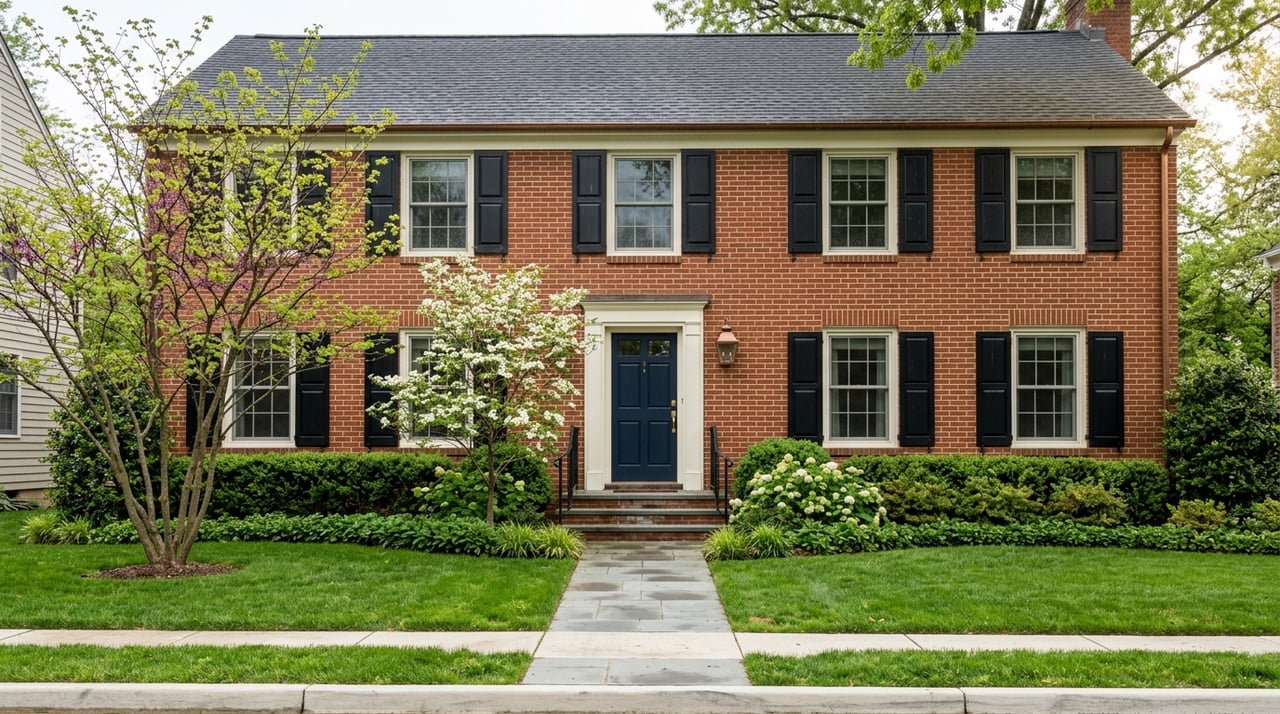
Brookland began as a late-19th-century commuter-rail village, and that history still shows in the housing and street pattern today. DC Planning describes the neighborhood as full of Victorian homes, with a mix that includes detached bungalows, Colonial and Victorian homes, rowhouses, and low-rise apartment buildings.
That mix matters if you want options. In Brookland, you may be able to compare a rowhouse, a detached home, and a smaller apartment-oriented property within the same broader search area.
One of Brookland’s biggest strengths is how its amenities cluster together. DC Planning identifies 12th Street as the neighborhood’s Main Street, and current neighborhood profiles place Brookland between Monroe Street Market and the historic 12th Street commercial area.
That gives you a practical framework for your search. If you want quick access to shops, cafes, services, and Metro, the Brookland-CUA, Monroe Street Market, and 12th Street triangle is often the first place to focus.
Brookland also offers a strong institutional and daily-convenience layer nearby. Current neighborhood profiles note assets such as Brookland Arts Walk, Monroe Street Market, Yes! Organic Market, Busboys & Poets, Right Proper Brewing, and a planned Trader Joe’s at Monroe Street Market, along with multiple universities, medical facilities, and five nearby hospitals.
For recreation, Turkey Thicket Recreation Center is a major neighborhood asset in the broader Brookland and Edgewood area. If your routine includes fitness, open space, or community recreation, that can be an important part of the neighborhood picture.
Brookland is the stronger choice if Metro access is high on your list. WMATA lists Brookland-CUA on the Red Line and notes bike racks, lockers, bikeshare access, and Metrobus connections.
The neighborhood also benefits from the Metropolitan Branch Trail, which runs through Brookland. DDOT’s Crosstown protected bicycle lane is intended to close a major gap in the bike network between Columbia Heights and Brookland, which adds to the area’s appeal for buyers who commute or get around by bike.
Woodridge has a different feel from Brookland, even though it is close by. DC Planning describes it as an early 20th-century bungalow neighborhood, and local neighborhood profiles emphasize detached Craftsman, Colonial, and Bungalow homes, mature trees, and larger lots.
If your search priorities include a yard, more separation between homes, or a more traditional detached-home setting, Woodridge may move to the top of your list quickly. It is often the neighborhood buyers compare with Brookland when they want Northeast D.C. but with a more residential block pattern.
Woodridge’s amenities are more corridor-based than center-clustered. Rhode Island Avenue is a major organizing spine for the neighborhood, and local profiles highlight retail and restaurant nodes along that corridor.
Current neighborhood information points to places such as Art Enables, Emma’s Torch, Provost, Zeke’s Coffee, and Felicia’s Woodridge Kitchen. The Woodridge Neighborhood Library at 1801 Hamlin Street NE also serves as a community resource with programming and meetings.
A practical way to think about Woodridge is this: if you want the strongest convenience and transit connections, look closer to Rhode Island Avenue. If you want a quieter residential setting with larger yards and detached homes, focus on the interior streets farther from the corridor.
Woodridge is more bus-and-corridor oriented than rail-oriented. Neighborhood profiles describe Rhode Island Avenue as a major commuter thoroughfare, and WMATA’s route information shows the corridor serving nearby areas including Brookland, Woodridge, Brentwood, Hyattsville, and Greenbelt.
Bike access is also part of the picture. Current profiles note three Capital Bikeshare locations within a half-mile and a Walk Score of 81, while DDOT’s Taylor Street protected bikeway concept includes streets that connect through the area.
When you are choosing between Brookland and Woodridge, housing type may be the deciding factor even more than price.
Brookland offers a broader mix. You will find detached bungalows, Colonial and Victorian homes, rowhouses, and low-rise apartment buildings. That variety can be helpful if you are still deciding whether you want a detached house, a rowhouse, or a lower-maintenance option.
Woodridge leans more clearly toward detached housing. The neighborhood is known for Craftsman, Colonial, and Bungalow homes on larger single-family lots, with tree-lined residential streets shaping much of the experience.
If you want architectural variety and proximity to a neighborhood center, Brookland may feel more flexible. If you already know you want a detached home with more outdoor space, Woodridge may give you a more targeted search.
Price is important, but it helps to look beyond one headline number. The available data suggests both Brookland and Woodridge span a wide range rather than fitting into one tight price band.
Recent Redfin data puts Brookland’s median sale price at about $702,500 for the three months ending March 2026, with homes averaging 71 days on market. Recent closings ranged from about $442,300 for a two-bedroom home to $1.41 million for a five-bedroom home, with several sales in the $550,000 to $950,000 range.
For Woodridge, recent Redfin data puts the median sale price at about $684,770 for the three months ending May 2026, with homes averaging about 59 days on market. Recent sales ranged from about $337,500 to $960,000, with additional examples at $435,000, $554,700, $749,900, and $777,000.
Local neighborhood profiles and listing data show somewhat different median value and listing figures, so the cleanest takeaway is this: both neighborhoods include entry points below the median, a healthy middle market, and larger renovated homes that move well into the upper price tiers.
If your budget is in the mid-$300,000s to mid-$500,000s, opportunities may still appear in both neighborhoods, especially among smaller homes or properties needing updates. If your budget is in the $700,000s to $900,000s, you may see a wider mix of renovated homes and larger layouts.
Above that range, Brookland has recent examples reaching into the $1 million-plus category. That does not mean Woodridge lacks higher-end options, but the recent Brookland sales data shows a wider top-end spread in the source material provided.
The smartest way to compare Brookland and Woodridge is to decide what you want your daily routine to look like. That will usually narrow the search faster than trying to decode every new listing one by one.
Here is a simple framework to use:
Choose Brookland if you want:
Choose Woodridge if you want:
Compare both closely if you want:
In both neighborhoods, your experience can change meaningfully from one section to another. That is especially true when you compare areas close to commercial corridors with quieter interior streets.
In Brookland, being near the Brookland-CUA, Monroe Street Market, and 12th Street triangle can mean stronger access to shops, transit, and neighborhood activity. Moving deeper into the residential grid may bring a quieter feel and a better chance of finding detached homes, bungalows, or other classic housing types.
In Woodridge, homes closer to Rhode Island Avenue may offer stronger day-to-day convenience and better transit access. Streets farther from the corridor may better match buyers who care most about yard space, detached homes, and a more tucked-away residential setting.
That block-level detail is where local guidance can make a real difference, especially if you are balancing budget, commute, house condition, and renovation potential.
Brookland and Woodridge are both strong options for a Northeast D.C. home search, but they usually appeal to different versions of the same buyer goal. Brookland leans toward walkability, rail access, and a neighborhood-center lifestyle. Woodridge leans toward detached homes, larger lots, and a more corridor-based version of convenience.
If you know what matters most to you, the choice often becomes much clearer. And if you are still deciding, comparing a few homes in each neighborhood can quickly show you which setting feels more like home.
If you want help narrowing the search, evaluating housing stock, or understanding how block, condition, and layout affect value in Northeast D.C., Jesse Oakley can help you frame the decision with local insight and a practical, property-by-property approach.
OUR VALUE AND COMMITMENT TO YOU. You work hard to make a statement about yourself, your beliefs, and who you want to become – don't settle for anything less than the best in the business. We value individuality, beauty, transparency, and thought. The homes we are going to show you reflect that. We recommend lenders, contractors, and title companies and have a thorough knowledge of DC neighborhoods.
Let's ConnectCompass
1313 14th St., N.W. Washington, DC 20005